
CS Colloquium: Learning, Perception, and Control for Humanoid Robots
Abstract: Humanoid robots are rapidly advancing, but moving beyond controlled demonstrations toward reliable autonomy in unstructured environments remains an open challenge. Achieving this goal requires robots to do more than execute predefined motions: they must perceive their surroundings, make decisions, and adapt their behavior through continuous interaction with the physical world. In this talk, I will present our research toward enabling intelligent humanoid locomotion and navigation through the integration of model-based control, reinforcement learning, and perception. I will discuss how physics-inspired learning can improve locomotion robustness, how compact terrain representations enable perceptive walking over challenging surfaces, and how hybrid planning and learning can support footstep selection and navigation in complex environments. Through simulation and hardware experiments, I will highlight the importance of combining physical principles with data-driven intelligence and discuss future opportunities toward general-purpose embodied AI.
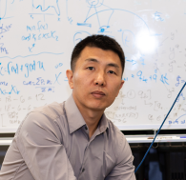
Bio: Ayonga Hereid is an Associate Professor in the Department of Mechanical and Aerospace Engineering at The Ohio State University, where he directs the Cyber-Physical and Robotics Systems (Cyberbotics) Lab. His research focuses on the modeling, planning, and control of robotic systems, with an emphasis on humanoid robots, legged locomotion, and powered exoskeletons. His work integrates model-based control, trajectory optimization, and machine learning to enable robots to operate robustly and autonomously in complex, unstructured environments. Prof. Hereid received the NSF CAREER Award in 2022 and has been recognized with the several Best Paper Awards and Finalists for his innovative work in bipedal robotics.